P-Camp ‘10: Thinking Like an Agile Product Manager


At Silicon Valley P-Camp ‘10 (March 13th), Rich Mironov led a session on “How Agile Changes Waterfall PM Processes and Thinking.”  This was a tall order for a 45-minute colllaborative session with 120+ attendees, so we ran a real-time exercise in creating, prioritizing and attacking a backlog of agile PM issues.  The room was full of enthusiastic attendees, both agile veterans and newbies, with good insights/advice from the crowd.
intro slide set
Agenda:

  • Handful of level-setting slides (< 15 minutes) – see the slides
  • Prioritize and time-box questions / issues raised by the group, i.e. build a backlog (< 10 minutes)
  • Tackle issues based on priority (20 minutes, allocated 5 minutes each for top 4 issues)
  • Thumbnail retrospective (3 minutes)

Rather than just talking about agile thinking and agile processes, we did a tiny re-enactment of some key process steps.  The group raised 7 issues and ranked them as follows:

1. How much should/must we document requirements? – TIME-BOXED to 5 MINUTES
2. How to prioritize a list of 100 items (tools and strategies for handling long lists) – TIME-BOXED to 5 MINUTES
3. Where does UED/UI fit?  We added architecture, since that has many of the same issues. – TIME-BOXED to 5 MINUTES
4. Agile metrics – TIME-BOXED to 5 MINUTES
5. How to deal with waterfall thinkers?
6. What to do about opinionated chickens (i.e. those who are interested but not committed)
7. What about engineers who don’t like product management?

This helped remind us of the essential nature of backlogs: that we don’t get everything done in any one iteration or release, but attacking the highest priority items gets them done first.  In our (very limited) 5 minutes per topic, there were good suggestions and solutions from the floor, including (by topic):

1. Attack requirements iteratively, with less detail up front and more as teams engage with specific stories and raise questions; aim for ‘just enough’ based on team’s knowledge; do enough to motivate the next discussion with Dev team.
2. Prioritize only the top portion (e.g. 30 items) of your list and leave the rest for last; use a scoring/weighting scheme spreadsheet to group and rank items; apply various tools called out by the participants
3. Rich’s strong bias that a UED framework must exist at the beginning of a project, just as a product architecture must exist if this is a complex cross-team effort, and just as a business model/customer segmentation theory must be in place before spending lots of money on development.  Sketching of the “one ahead, one behind” model for designing and testing UED elements.
4. A very brief extension past team’s story velocity toward economic value metrics per story or epic.

In a whirlwind retrospective (purely for structural completeness), the collective wisdom was that next time we might actually propose solutions to the above rather than just talking briefly about them.

Some of this material was lifted from earlier discussions and presentations on product manager/product owner issues, for instance this Product Camp NYC talk.

Third Annual Silicon Valley P-Camp

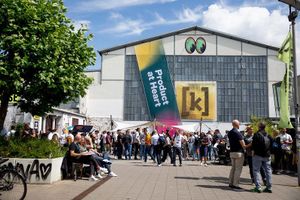
The third annual Silicon Valley P-Camp was the largest gathering of product managers ever!  550 product managers got together for a Saturday of discussions, talks, panels, networking, fun, food, t-shirts and surprises.  Under the leadership of SVPMA and with Yahoo! generosity.  34 sessions, talks and panels were chosen from 70 proposals, for a long day of collaboration and participation.  A wiki was set up to capture presentations, comments, photos and other information.

P-Camp ‘10
Continue reading

Agile Product Manager Dilemma

Rich Mironov presented a talk on “The Agile Product Manager/Product Owner Dilemma” at PMEC in San Jose.  This generated some lively discussion about how Product Management is different in agile organizations (especially Scrum teams) and the challenges of Product Owners who lack Product Management support or experience.

What: “The Agile Product Manager/Product Owner Dilemma”
Part of: PMEC 2009, AIPMM’s Product Management Education Conference
When: Tues, Nov 17th at 11:00 AM as part of a two-day event
Where: The Fairmont San Jose, 170 South Market Street, San Jose, CA, www.aipmm.com/pmec

Rich has championed discussions within the Agile community about the need for product strategy and business-level planning – and how it needs to wrap around the software development process.  He is one of very few people bridging the PM and Agile communities.

PMEC09

Company-Wide Business Agility and the Soviets

Until recently, most of the discussion around Agile has been strictly limited to software development teams.  We focused on building and testing and shipping software more effectively, with PMs/POs managing backlogs and user stories.  As software companies mature in their adoption of agile, though, it’s becoming clear that agile uncovers inefficiencies throughout the company. It also creates opportunities for executives to drive improvement in market-facing groups such as Support, Marketing, Professional Services, and Channel Sales. Continue reading

Adding Outbound to Cross-Functional Teams

Lately, there’s been lots of discussion about whether Agile is strictly a software development methodology, without major impact on the outbound parts of a software company, or whether it’s driving broad changes in how companies deliver value to their markets.  At Enthiosys, we’re seeing the move to business agility: applying agile techniques beyond software development as a source of tangible company benefits. Continue reading

Burning Your Boats

A burning boatI spent 2006 consulting to small tech companies, including seven months as an interim executive.  I also nearly co-founded a start-up.  Come year-end, though, I find that I haven’t created a new company or joined a fledgling venture. This brings to mind discussions of commitment and “burning your boats.” Continue reading

Owning the Gap

Mind the Gap!Product managers are usually the people who “own the gap” for their specific products: identifying all of the missing or incomplete features and services and supporting processes that customers need for a successfully experience.  This discussion is about elevating that concept to the product executive, who should be looking for systemic problems in the company’s end-to-end production cycle. Continue reading

Defensive Processes

New ventures begin with an entirely empty slate: no products, no customers, no desks, no organization charts, no established procedures for creating value.  Only blank pages and empty office space.  This is part of the exhilaration, the chance to do things better and more simply than the last time. Of course, your founding team has lots of experience: ideas about how things get done.  As the product champion, you’ll almost immediately be defining what your startup makes and how it gets delivered. Generically, “processes”. Continue reading

Product Management is Inherently Political

Capitol BuildingRecently, I had lunch with a bright young product manager trying to perfect the process for deciding which features to include in his next product release.  Skipping past theory about “internal ROI” and other quantitative approaches, we talked about having to choose among the many demands for enhancements from sales teams: that MRDs are only the starting point in an ongoing lobbying campaign for product improvements.  In other words, product managers will always have to manage the emotional world of people and internal politics. Continue reading

Growing Back into Management

There’s a funny paradox about joining a tiny company and helping it grow.  If part of its attractiveness is an intimacy and lack of management overhead, success creates its own challenges.

Very small companies can operate on informal communications: all ten employees know what each other are doing.  The entire staff can grab lunch together, and all-hands meetings easily fit into the conference room.  News is shared over the cube wall.  Job descriptions and titles are afterthoughts.  Decisions are made in the aisle. Continue reading